Got That Ring of Confidence

INDY-drawing

Nothing earth-shatttering to report here. I just noticed this while flicking through some images of a project by HOK. This is the plan for the recently completed terminal at Indianopolis Aiport. It’s built in the “midfield” area of the present airport, between the two main runways, but goes a long way further than simply linking them. The heart of the terminal building is a central gathering point whose circular shape is deliberately intended to recall the shape of the City’s central public space, Monument Circle, which strikes me as incongruously civic for a transport function. Airports are about the here and now and the immediate future.

It’s even grandiosely called the civic plaza and is even supposed to provide public event space and enable visitors to sample the character of Indianapolis and the region. It’s topped off with a 61m diameter skylight.  The total area of the new terminal is 111,000 square metres. It’s got 40 gates, 10,000 light fixtures and its building from 11,000 tons of stell. It’s got 10 moving walk ways, 23 Elevators and 10 Esclators and 40 departure/arrival gates.  The Indianapolis Airport cost $1.1 billion to build. Perhaps HOK are right and one day this will be an urban centre which needs a monumental heart.

Posted in Architecture | Leave a comment

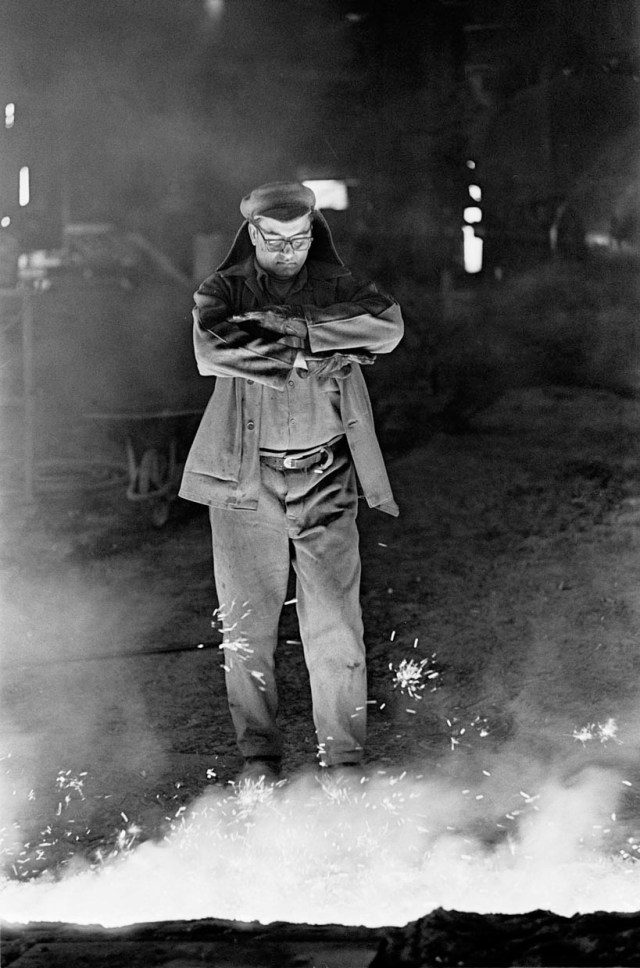
Photographer Nick Hedges at Bilston in 1976

tapping the furnace, steelworks,Bilston, 1976Tapping the Furnace
Steelworks, Bilston.
1976 Continue reading

Posted in Photography | 2 Comments

Unfamiliar Playing Ground


imscared

Some people find the future boring. But in Seattle, the future looks pretty exciting. Not because of the backdrop of sci-fi speculation symbolised by the Space Needle, but because set within that backdrop is the Seattle Public Library; a building which affirms ones faith in the future. To some people architecture is a straightforward case of aesthetics, a code to signify certain social moments, or political movements which for better or worse are long gone. If you take that approach you could imagine a new public project in the city riffing on this post-war futurism in a cack-handed postmodernist kind of way. 

How does it do that? Rem Koolhaas has said that he writes architectural scenarios. This may seem apposite but if we look at how his early work is represented in film, then we can get an idea of why this later public building works so well. In Ila Bêka and Louise Lemoine’s film Koolhaas Houselife we see an apparently critical view of The House in Bordeaux, a seminal project by OMA completed in 1998 seen through the eyes of Guadalupe Acedo, caretaker and cleaner of as she fulfils her daily chores.


Continue reading

Posted in Architecture | Leave a comment

These Boys Take Some Beating

They could’ve just said, ‘we pay engineers well in Norway and value their contribution to society’ but they didn’t. This instead is how they advertise for young engineers on the other side of the North Sea. Hydro is a global, integrated aluminium and hydroelectric power company which is as old as the Norwegian state itself. In the early twentieth century when the company was founded Norway was one of the poorest nations in Europe. Now thanks largely to the way it has managed its power resources, distributed its wealth and invested in light and heavy technology, it is one of the richest. Our wealth from the North Sea was used to fill in for the decrease in taxation revenue and increase in our tax burden prompted by the decision to let heavy industry go to the wall and de-regulate our financial markets ; the very system which has just reared up and bit us in the knackers. 

Mind you, they can’t get enough of our football on their TV so I suppose these things even out…

Posted in Engineering | Leave a comment

Stormy Weather

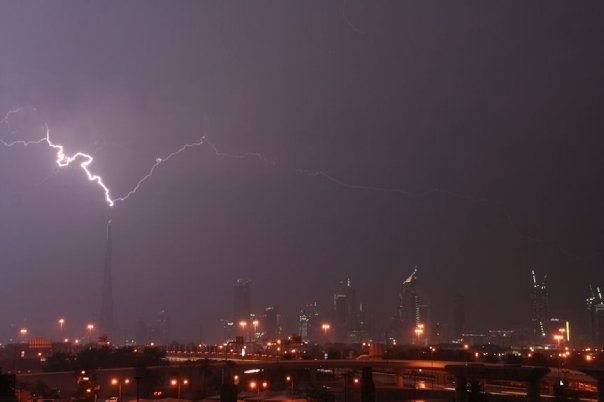
burj lightning
The Burj Dubai during a storm.

Posted in Architecture | Leave a comment

I Always Feel Like…

3499645949_826aa6068d_b

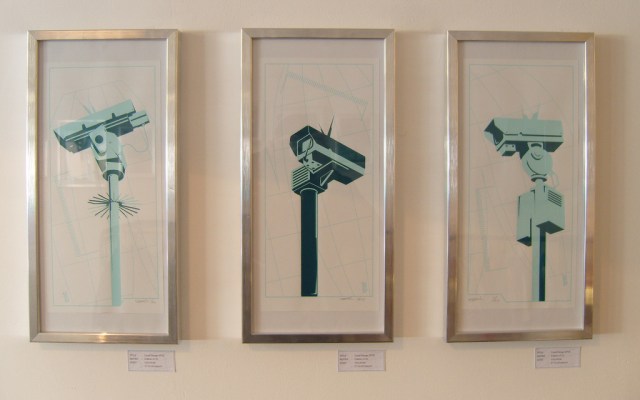
It would be foolish to deny that our public space is increasingly regulated. With Community Police and increased TV surveillance, we not only feel that we’re being watched more, we are being watched more. But in what way exactly? Derm’s series of beautiful prints of CCTV cameras highlights an ambiguity however. The artist has caught these cameras in isolation or abstracted them to form a floral pattern. In doing so he’s not just highlighting their existence but turning them into a beautiful shape. He no doubt hates what they represent but he’s separated them from their intent and, blimey celebrated them as part of our urban environment. Stunning. The series called, Focal Range is in a variety of media including photography, spraypaint and screenprinting.

Read the Manifesto Club’s briefing document on the Hyper-regulation of Public Space if you haven’t already. It is an important document because it highlights the fact that we are losing our autonomy  and that this freedom to act is being taken from us by stealth. The opening of the document bears repeating:

Over the past few years, there has been a massive growth in restrictions  on drinking in public, including: the ban on boozing on London Tubes and buses, brought through by new Mayor Boris Johnson on 1 June 2008; 613 designated areas of the country where drinking is restricted by local authorities; Scottish bylaws banning drinking from many town centres, beaches and beauty spots; and a ban on bring-your-own (BYO) alcohol at summer music festivals. Similar regulations have been brought through on beaches and town centres in New Zealand and Australia, on San Diego beach in the USA, and in city centres in the Czech Republic.

But what the document also suggests is that we have a responsibility to ensure that we resist the attempts to prevent us from using our public space as we see fit. It asks us to concentrate not on the CCTV’s but the frequently confused application of dubious by-laws. I’m not a believer in a conspiracy of observation. If you want to know how I think we’re being watched, I think it’s part of a clumsy attempt by the authorities to reassure themselves and us, not a big brother style era of government. By watching the watchmen, we’re slowly beginning to understand the psychology of surveillance.

David Aaronovtich has questioned the statistic that we are viewed by 300 cameras on average on the way to work and shot this film with people from Liberty. As he points out at the end, it’s a bit pointless trying to count cameras when you don’t even know if they’re pointed at you. However his comment that cameras reflect our fear of crime rather than our morality gets to the heart of the matter.

If we accept that there is no conspiracy of surveillance, that the array of agencies who own CCTV are as incapable of co-ordinated action on an individual or group then why do we fear them? Why not make pretty of them? We have nothing to fear but some cameras which often aren’t on or even attached to anything. And a slow mission creep by security guards and quasi-policemen.

Catch Focal Range at the Pageant Store in Edinburgh. But hurry, the exhibition runs until Sunday 24th May.

Posted in Urbanism | 1 Comment

Moving along nicely

May 2009 Olympics Stadium

I still think that it’s going to be a bit silly when its finished and its wrapped in muslin or whatever. Good to see that the death of the UK construction industry has been somewhat exaggerated.

Posted in 2012 | Leave a comment

North vs South VS East vs West

Good ol’ Igster has become the darling of the London Paper and BBC London AND the Metro with this lovely little film, which turns Google’s Streetview into a narrative device as opposed to an orientation device. Tellingly Igster created the film first, taking about 6 hrs to record the footage. Then he sped it up around 1500%. It was only then that the he wrote the song and recorded it with friends as a bit of a laugh. 

I’m not a huge fan of the song but the video is brilliant. (It might be worth turning it down.) Without wanting to get too BLDGBLOG about it, the film imagines what it would be like if the underground was overground, which is a nice inversion. It’s a lovely bit of wish fulfillment too speeding through the city.  It also neatly references the London to Brighton series of films, which began in 1953 with a 4 minute time lapse of the journey, then went down to three minutes in the 1980s. And then two minutes a bit later. Igster’s journey though was never undertaken by a single individual. It is the result of one individual finding his way through the exhaustive photographic work of a whole fleet of photographers. 

Despite having several branch lines, the Northern is still the spine of the city’s transport infrastructure north to south and much improved on the dark days of the 1990s. It would be strange to have it split into two separate lines as was planned, although this does seem to have gone on the back-burner since Crossrail was announced and the Olympics development got undeway. It seems as if London is becoming increasingly divided along its east-west axis by planners rather than its north-south one as it still the way most of its inhabitants do, I think.

Posted in Media | Leave a comment

“It’s all very different from Radio Caroline”

Great little documentary on Pirate Radio in London, first broadcast around 1995 or so if the total fixation with all things Jungle is anything to go by. The documentary comes down pretty firmly on the side of the broadcasters and all the more admirable for doing it in their slightly stuffy voices. “From trip hop to handbag house” “it’s all very different from Radio Caroline” – all pronounced in perfect RP.

Nice bit in the third part of the documentary in which a police appears on a pirate radio station to talk about race relations and another nice little bit in which one of the Department of Trade Industry’s foot soldiers expresses sneaking admiration for the pirate broadcasters ingenuity, technical skills and determination. 

However, it does reveal how little the ridiculous situation has changed. Authorities have been increasing their efforts to crack down on pirate radio stations in the UK. Now though it is the regulator Ofcom which is trotting out the tired old line that the broadcasts interfere with emergency service frequencies. In 2008 Ofcom raided 43 studios used by illegal stations and shut down 838 illegal transmitters. Even if technology is getting better, the pressure by big business on smaller illegal operations is getting stronger.

This top little documentary also highlights the fact that mainstream broadcasters are today operating at a level consistently below standards just over ten years ago. So as underground broadcasters hold the line, the mainstream ones deteriorate.

Posted in Media | 1 Comment

Hotel El Duce

Dan Dubowitz’s latest photography exhibition starts at Fermynwoods next month. These pictures predominantly of youth camps from the fascist era grew, as Dan’s projects do, out of a series of road trips. The pictures from this particular series were taken along the Tuscan and Emilio-Romanian coasts of Italy near where Dan now lives.

The pictures speak for themselves. The fact that these buildings are still standing shows the rigour with which they were made. They were important components of the architecture of Italian fascism. Children living in the big cities would be removed here for a summer of good air, marching about and spoon-fed indoctrination. The exhibition has already been shown at the Architekturgalerie in Weißenhof, near Stuttgart. There’s a book of the project due to by architect Patrick Duerden who is also a curator at Fermynwoods.

Posted in Old Things | Leave a comment