Review of the Year in Architecture: 2020

At the end of the year it is tempting to look at the lockdowns of 2020 as unprecedented conditions: unique responses to a totally unforeseen crisis. And whilst the experience of it has been completely novel, the sneaking suspicion grows that it is an exaggerated expression of tendencies already latent in social relations. I wrote a big piece on architecture’s role in the post-Covid settlement for The Critic, and if I left it unstated, I should say it clearly now: the biggest tendency is the repeated failure of a government to address house building. The lockdown feeds into that but in a way that is all too familiar.

I was alone perhaps amongst my peers in finding the Tory’s planning proposals, launched just before the pandemic, interesting. They were based – I argued – on a bipartisan process – dating back to the 1990s –  in which the local plan is asserted as the determining document so that one-off planning applications cease to be a vehicle of opportunistic developers on hand and, where the proposals are actually positive, attacked by campaign groups. I saw potential in negotiating this new priority. I hoped the local plan could become architectural in tone and appearance and I believed the proposals would have addressed the situation whereby it is only the volume house builders who can navigate the system and as a result smaller house builders would be able to build homes of differing sizes and, hey, design. 

It matters little now though. If the pushback from Conservative MPs and councillors against the proposals at a time of government vulnerability didn’t kill it – with Theresa May leading the rebels in grinning revenge mode –  then a realisation that office real estate is in deep trouble did. A flip from planned urban expansion to adhoc retrofit is being frantically reimagined. The fix is very much in. The fact that all conversions will now be subject to minimum size standards is a positive step. The fact that people will be compelled to live in areas designed to host offices rather than residential is not. It suits – as I say in the article – the preoccupation in contemporary architecture for treating the city as a site of historical rupture which needs fixing. I don’t feel that we are addressing the needs of the British people, but some good architecture may come of it. 

Some of the action around urban planning is profoundly worrying too. While the Local Transport Notes have been applauded by the cycling lobby, they have antagonised as many as they have pleased. The decision to restrict movement – regardless of the reason – under the cloak of lockdown should be resisted especially since this has been done with no real democratic mandate. Carlos Moreno’s “la ville du quart heure”, the 15-minute city seems like a rinky-dink idea: divvying up our conurbations into slivers of space in which work, home, shops, entertainment and education can all be confined.

Trying to compartmentalise London into arrondissements would be a disaster never mind Bristol, Liverpool or Glasgow. Paris as a whole is a segregated city: divided into bo-ho areas, in which everything except cheap labour is available, and dormitory banlieues for immigrant labour. The chi-chiness of the urban core needs this division to make to work and the idea that this is something to be replicated elsewhere is to be resisted. The culture wars of the last 5 years have been tiresome to all. But we are facing a new one around cars – reading Why We Drive by Mathew Crawford left me fearing for a new one on a par with the gilets jaunes.

And yet oddly, 2020, has been a strangely universalising experience. For me, it began making magazines about architecture around the world, but it ended up with mne publishing stories ostensibly about the interior of our houses but in reality about the interior state of mind that lockdown produced.  As our response to the pandemic slowly cut off the possibility of reporting on the world abroad a new need emerged: to communicate the condition we had created for ourselves. 

Working with friends on our Machine Books series, we began with an inquiry into the literature of the early 20th century as a possible guide to our current predicament. This intuition that short stories from the late Victorian and early Edwardian literature period would, somehow, shed light on the experience of lockdown, I think was vindicated. We didn’t just find a model, we found work that spoke directly to us in our strange new condition. The works were created in a time during which a rapid advance in human thinking from Darwinism to Marxism to Freud to Mary Wollstonecraft came to bear on existing social conditions so emphatically they were almost literally visible as a structure. 
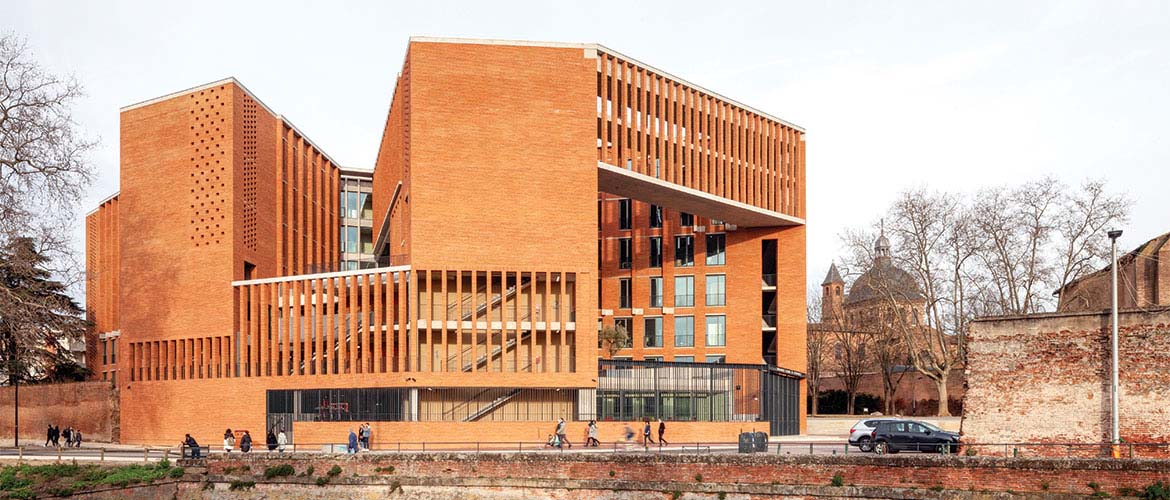
The imaginary is now real and the real is now the imaginary. i will have to retain the images of the best architecture that completed in 2020 in my mind: the Toulouse School of Economics by Grafton Architects being a great example. And instead live with the surrealism of lockdown. The lightbulb moment for Machine Book of Weird was reading Mark Fisher’s useful definition in his book The Weird and the Eerie. We subsequently found a series of texts that explore how our condition is now about the contact between incommensurable worlds. Our preoccupation for the foreseeable future is with interiors and the thresholds they present to other places, which for now, we must imagine. 
Posted in Uncategorized | 1 Comment

Defending Holyland

lakewood1

This is the text of a defense i gave at a Balloon Debate organised by the Future Cities Project in which I defended my favourite depiction of the city in a work of art. 

Sitting within this beautiful beguiling and ever-so slightly self-important city, it’s very easy to be lulled into the assumption that London is the be all and end all. That it’s a work of art in itself, created for us and us alone. There’s an odd psychological self-reference that often happens with the lone artist and the city. Rem Koolhaas writes in Delirious NY that when Salvador Dali arrived in New York, he proclaimed it as a great monument it was to him. There is a kind of egoism about this love of the city. Watch out for it.

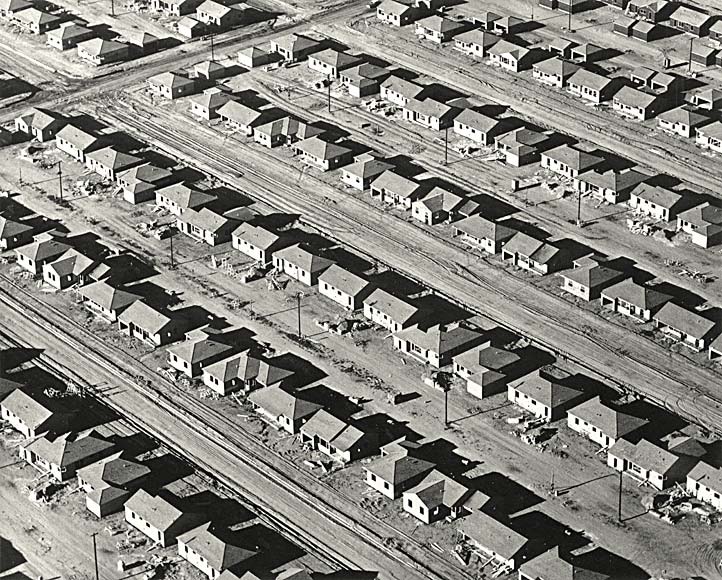
I’m not here to advocate for a book about London or New York but one for a city called Lakewood in Southern California. It’s called Holy Land by Don Waldie. It’s not without scale. Enormous acts of road building and engineering of water tables made it possible. Key to the early stages of the book  is a description of how the 17,500 houses that form the core of Lakewood was battered up by former GIs and incomers from the midWest in just 3 years. Many different plans, 7 different facade treatments, no two alike adjacent. 30,000 people turned up on the first viewing day. Ok the civic and administrative landscape of California today is fragmented, but Lakewood is a city, constituted as such standing on the flat-lands to the south of LA that were opened up by the aerospace industry in the great optimistic years after WWII.

Holy Land is a book about the poetry of planning, building and inhabiting a place: simply but with attachment purpose and intelligence. It is divided into 316 small poetic episodes, some as short as a line: “The grid is the plan above the earth. It is a compass of possibilities.” Longer sections describe the speculations of the Jewish developers who built the town; how the town like many,  first excluded blacks and hispanics but went on to open up and become the most ethnically diverse part of America; there are passages about how the city’s fluctuations in fate were tied to the Douglas aircraft factories and another about why the names listed on the Vietnam war memorial were so inaccurate: an episode that if it was written by Milan Kundera would be on literature syllabuses.

It is a brutally honest book too, in the unflinching way that Chekhov is honest, acknowledging the formality and conservatism of the place, as well as the solitude it can engender. But the book also burns with a quiet anger. Waldie when I went to Los Angeles was a charming host, who only once give a glimpse into the animus which had caused him to take up his pen and write about Lakewood. I asked him about the wider cultural attitude to the suburbs. He shifted in his chair and referred to Lewis Mumford that great champion of the urban with a grimace. Mumford was an arch- modernist who dismissed the suburbs of the 1950s as the product not of the desire to house huge swathes of demobilised troops but of “a childish view of the world, in which reality was sacrificed to the pleasure principle.”

Waldie’s book is a slow and steady demolition of this patronising attitude. But what makes the book truly great is the way in which Waldie maps the history of Lakewood’s coming together as a town and the complex culture – frequently religious in nature – that exists within it.  He maps the town’s story too to the solitude of a bachelor contemplating his parents death, how it brings him closer to his God and how the simple poetry of life amongst his friends consoles him.

Like Richard Rogers more recently, Mumford championed the medieval city as the be all and end all of urban development: the kind of place where the less well off knew their place. Yet the people Waldie  depicts are in a profoundly new landscape, they’re pioneers, working out how to live there according to their own values and their sense of common purpose.  Waldie explains how and why Lakewood collectively chose to form their own city – looking after their own policing, fire services and other systems, rather than being absorbed into another.

“Any idiot can face a crisis. It’s the day to day living that wears you out,” wrote the US playwright Clifford Odets in an introduction to the collected plays of Chekhov in the 1950s just about when Lakewood was being inhabited. This book won’t just change how you think about a specific suburbs, it will also provide you with a pattern for how me might think and reappraise all suburban development.

Posted in Uncategorized | Leave a comment

Review of the Year in Architecture: 2018

Interior of the British Pavilion, Venice.

This year has been one of relentless discussion and argument; one in which very few quarters have been given by either side in the Brexit debate so it would be nice to spend a few moments off the subject and think about beautiful things. Wouldn’t it? Yes, but actually no, sorry, not possible. Even when it comes to building, which tends to have much longer lead times, the issue of Britain’s impending departure from the EU has come into play.. The truth is that even if architects don’t know what to think yet beyond a certain despair, it is already inveigling its way into our built environment and needs to be addressed. Britain has foregone its quite clearly ill-founded reputation internationally for sang-froid and order and we might as well live with it. Continue reading

Posted in Architecture, Engineering, Politics | Tagged , , | Leave a comment

REVIEW OF THE YEAR: 2017

z1

Zaryadye Park, Moscow.

Last year, in a world capital, a fire in a tower block caused the death of many of its poor inhabitants. This event prompted the national government of that country to immediately bring forward a radical policy to improve the urban conditions of that city. Of course, this swift response should immediately alert the reader that this was not the Grenfell tower disaster. Beijing’s municipal authorities have just completed a “special operation” targeting building safety violations in the city after a fire in poorly constructed apartment building killed 19 in Xinjiancun, an area described by Reuters as “a ramshackle village of migrant workers on the far southern fringe of Beijing”.

Continue reading

Posted in Architecture, Politics, Urbanism | Leave a comment

First as Farce, then as Farce Again: Boris, the tower and the bridge.

This is a version of a Comment piece I wrote in Blueprint that must’ve been published in early 2010 about the design competition which led to the Arcelor Mittal Orbit and in which Boris Johnson, then mayor had a major hand. It has eerie parallels for the London Bridge process; a total lack of transparency and fairness. At the time, the tower on the Olympic site was treated as something of a laugh even by those who opposed it. In contrast to the dedicated way the Architect’s Journal news team have picked apart the process by which the Garden Bridge was commissioned, back in 2010 the editorial line about the Orbit was to find the whole thing a bit of a wheeze. Anyway I think we can see some consistency, if only because I don’t think anyone comes out of  the Orbit or the Garden Bridge campaigns that well. 

Paul Fryer, Transmission, 2008

Continue reading

Posted in Architecture, Uncategorized | Tagged , , , , | Leave a comment

REVIEW OF THE YEAR: 2016

fondazione-prada_bas-princen_1-800x640

Gold leaf and a new aluminium foam clad structure above an old gin distillery. The Prada Foundation in Milan is greater than the sum of its parts.

Reviews of the year may seem arbitrary, particularly when it comes to architecture, which by its nature takes years to gestate before it is completed. Yet they have their uses. And not simply because they give harassed editors a no-brainer at a time when any sensible human being’s mind is on the office party and a week off. They are also the moment when, in trying to string together a narrative that links all the apparently haphazard events of the year into some single line, journalism becomes the first haphazard stab at history.

It seems particularly pertinent this year as a certain historical turn in architecture has asserted itself. The finest architecture of the year for me were two buildings by OMA both in Italy: one in Venice and one in Milan. The former, the Fondaco dei Tedeschi was effectively an act of archaeology revealing the twentieth century reality behind a building that was supposed to be centuries old. It is a deconstructed building as much as a renovated one which reveals the concrete-and-steel beamed reality of its 1920s conversion and values that as much as the traces of the 16th century.

Continue reading

Posted in Architecture, Limits of Europe, Urbanism | Tagged , , , , , , | 1 Comment

Anarchy on Wall Street

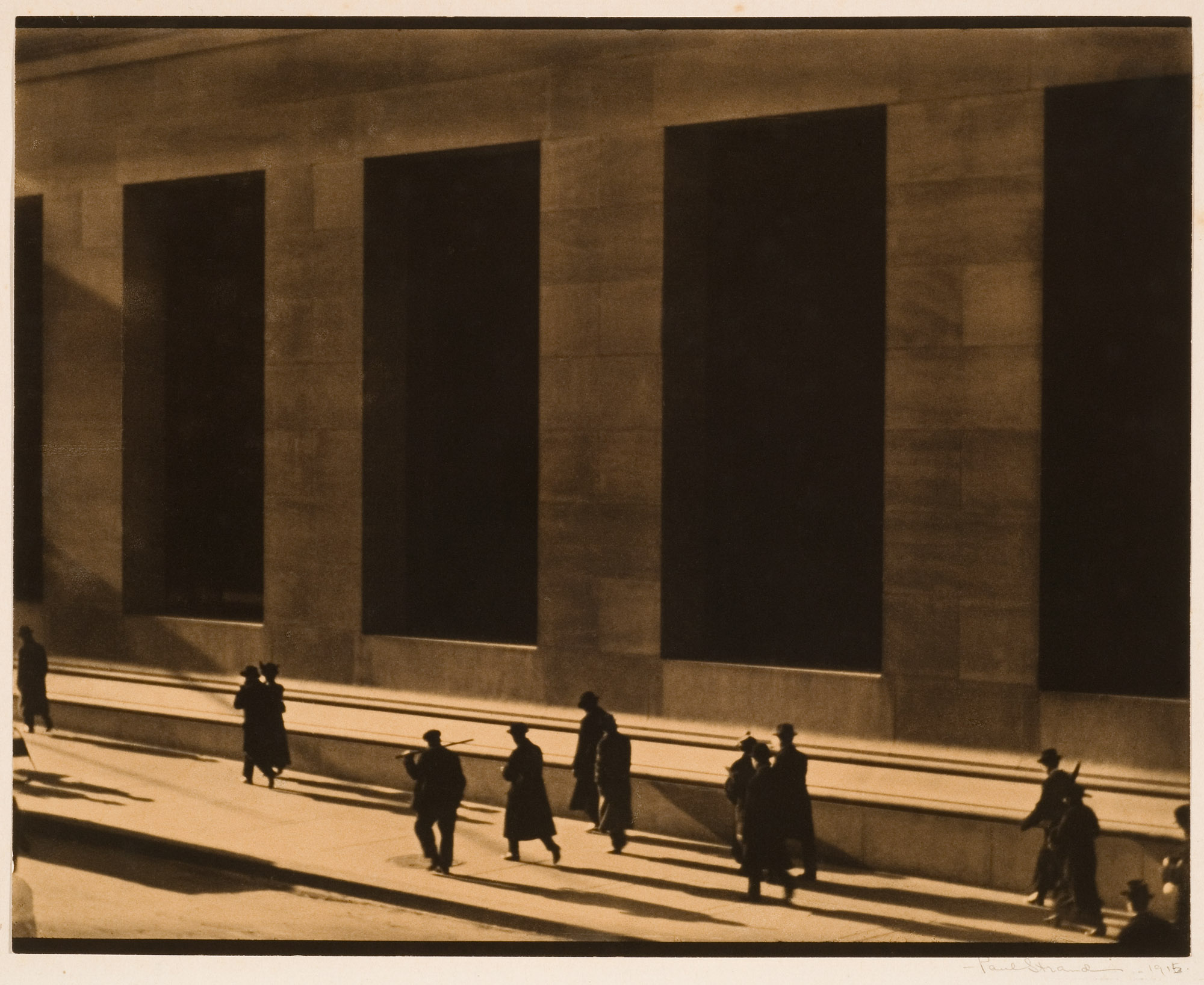
Paul Strand, Wall Street, New York, 1915. Mercury toned platinum print mounted on Japanese paper, 25.6 x 32.3 cm. PH1985:0224. Canadian Centre for Architecture, Montréal. ©Aperture Foundation, Inc., Paul Strand Archive.

On 16 September 1920, a wagonload containing 45 kilos of explosives and 230 kilos of lead weights placed outside the JP Morgan bank at 23 Wall Street in New York was detonated, killing 38 people and injuring many more. The glass in the tall windows was blown inwards killing at least one JP Morgan employee of and injuring others. Interviewed in the New York Times the following day, one of the partners of JP Morgan Bank said: “From what we have learned I am inclined to believe that the explosion was due merely to an accident. There are no reasons that we can find that would lead to a premeditated bombing.”

Continue reading

Posted in Architecture, Design, Photography | Tagged , , , , , | 1 Comment

Picking Holes In The Pritzker. Or You’re Aravena Laugh.

ARQ.ac-9

ARQ.ac-9

In his article announcing Alejandrao Aravena as the Pritzker winner Ed Heathcote suggests that handing the prize to the young Chilean architect offers hope to the architecture profession racked with self-doubt over its lack of purpose. “The award is a vaccination against accusations of irrelevance. How could anyone argue with that?” he concludes. It is an interesting question and one I wish to address briefly. How could anyone argue against it? By stating very clearly that Aravena’s work which shows promise, although it must be said, not a spectacular amount of originality when it comes to the creation of form, is at times, a theatre of social engagement.

Continue reading

Posted in Uncategorized | Leave a comment

An interview I did with Christopher Lee in a different life.

Although he surely wouldn’t approve, it seems only right and proper to begin a Christopher Lee story with a Dracula anecdote. Actually, it is just over 25 years since Lee took the decision – as he puts it in his autobiography – ”to Draculate no more”. But the shadow of the Count – metaphorically if not literally, given that vampires aren’t supposed
to cast such things – obviously still haunts him. So let’s go back to 1999, when Lee agreed to narrate a documentary on the character’s historical origins. Continue reading

Posted in Other. | 1 Comment

Architects: it isn’t always about you

IMG_2185

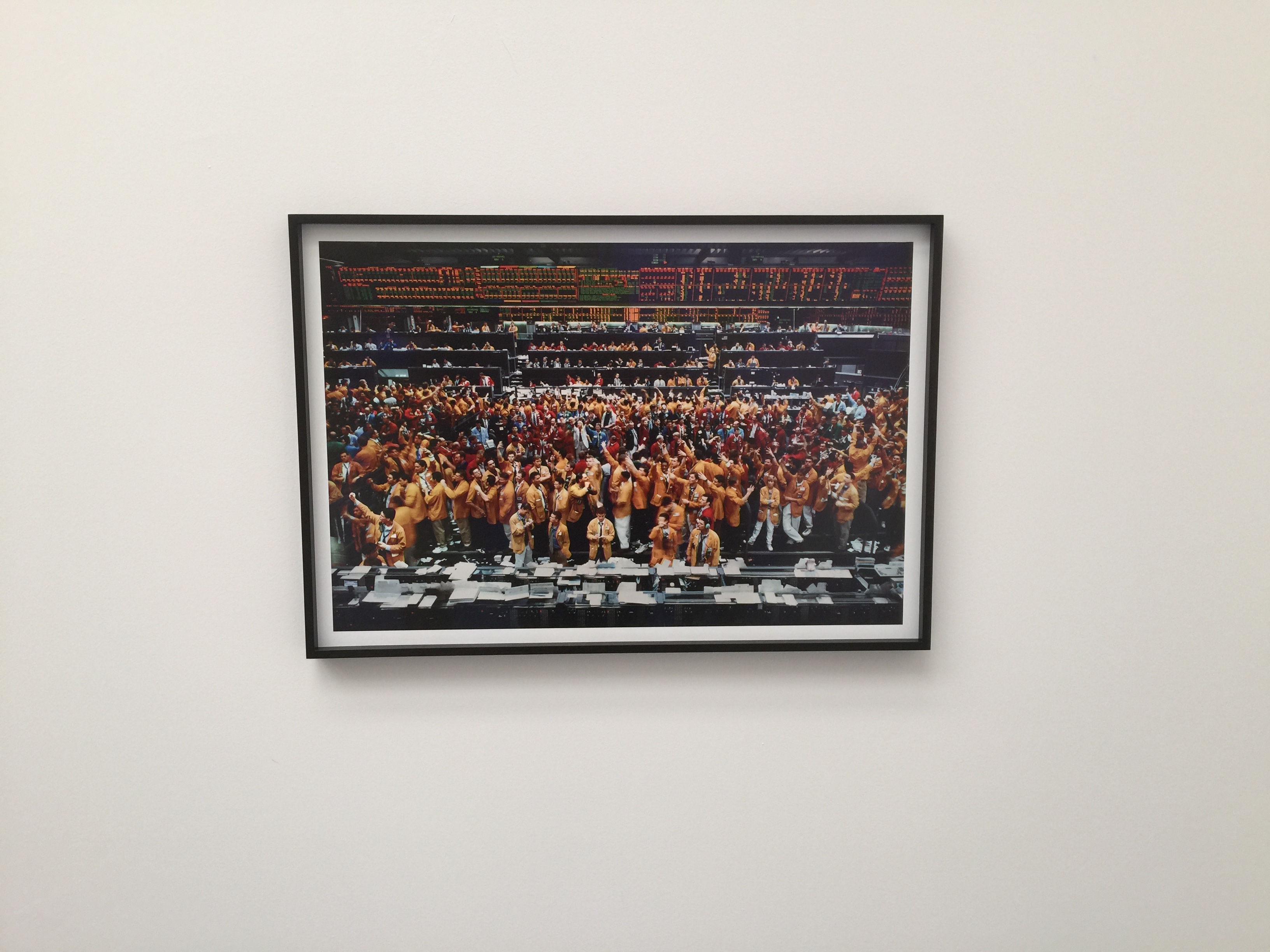
Andreas Gursky’s work at the Venice Art Biennale


The shortlisting of the architecture collective Assemble for the Turner Prize has been a surprise to most commentators in the architectural world. Largely because their story seems rather familiar. Here are a group of young trainee architects and their friends in other fields who came together to turn a former petrol station into a cinema in Clerkenwell in the summer of 2010. There project was architectural in purpose and ambitious in its wider intention. Let’s not just turn this petrol station into a cinema but all the other 4,000 odd abandoned ones across the country. It was executed well. The choice of materials was ingenious, particularly the luxurious ‘ruched’ curtain made from a metallic vapour control layer normally inserted in a buildings envelope. It was in a rich vein of temporary, self-initiated work brought to London by the Paris based collective Exyzt and the Berlin-based group Raumlabor.

We have become used in architecture to this type of practice; typifying what is known as social entrepreneurship, the model of which owes a lot to Raumlabor. The pioneering German group’ s practice of using temporary, self-built structures as a catalyst to discussed permanent changes to public space with the public that would use it and their influence has been immense. Indeed the late Matthias Rick and his cohorts set the purpose and direction to a very key strain of contemporary architectural production, channeling Cedric Price’s later understanding of temporary structures as catalysts and propositions to further more permanent structures. Assemble have used this tactic to good effect in their work around the Commonwealth Games in Glasgow as well as the street in Liverpool for which they were nominated. Continue reading

Posted in Architecture, Art | Tagged , , , , | 1 Comment