

At the end of the year it is tempting to look at the lockdowns of 2020 as unprecedented conditions: unique responses to a totally unforeseen crisis. And whilst the experience of it has been completely novel, the sneaking suspicion grows that it is an exaggerated expression of tendencies already latent in social relations. I wrote a big piece on architecture’s role in the post-Covid settlement for The Critic, and if I left it unstated, I should say it clearly now: the biggest tendency is the repeated failure of a government to address house building. The lockdown feeds into that but in a way that is all too familiar.
I was alone perhaps amongst my peers in finding the Tory’s planning proposals, launched just before the pandemic, interesting. They were based – I argued – on a bipartisan process – dating back to the 1990s – in which the local plan is asserted as the determining document so that one-off planning applications cease to be a vehicle of opportunistic developers on hand and, where the proposals are actually positive, attacked by campaign groups. I saw potential in negotiating this new priority. I hoped the local plan could become architectural in tone and appearance and I believed the proposals would have addressed the situation whereby it is only the volume house builders who can navigate the system and as a result smaller house builders would be able to build homes of differing sizes and, hey, design.
It matters little now though. If the pushback from Conservative MPs and councillors against the proposals at a time of government vulnerability didn’t kill it – with Theresa May leading the rebels in grinning revenge mode – then a realisation that office real estate is in deep trouble did. A flip from planned urban expansion to adhoc retrofit is being frantically reimagined. The fix is very much in. The fact that all conversions will now be subject to minimum size standards is a positive step. The fact that people will be compelled to live in areas designed to host offices rather than residential is not. It suits – as I say in the article – the preoccupation in contemporary architecture for treating the city as a site of historical rupture which needs fixing. I don’t feel that we are addressing the needs of the British people, but some good architecture may come of it.

Some of the action around urban planning is profoundly worrying too. While the Local Transport Notes have been applauded by the cycling lobby, they have antagonised as many as they have pleased. The decision to restrict movement – regardless of the reason – under the cloak of lockdown should be resisted especially since this has been done with no real democratic mandate. Carlos Moreno’s “la ville du quart heure”, the 15-minute city seems like a rinky-dink idea: divvying up our conurbations into slivers of space in which work, home, shops, entertainment and education can all be confined.
Trying to compartmentalise London into arrondissements would be a disaster never mind Bristol, Liverpool or Glasgow. Paris as a whole is a segregated city: divided into bo-ho areas, in which everything except cheap labour is available, and dormitory banlieues for immigrant labour. The chi-chiness of the urban core needs this division to make to work and the idea that this is something to be replicated elsewhere is to be resisted. The culture wars of the last 5 years have been tiresome to all. But we are facing a new one around cars – reading Why We Drive by Mathew Crawford left me fearing for a new one on a par with the gilets jaunes.
And yet oddly, 2020, has been a strangely universalising experience. For me, it began making magazines about architecture around the world, but it ended up with mne publishing stories ostensibly about the interior of our houses but in reality about the interior state of mind that lockdown produced. As our response to the pandemic slowly cut off the possibility of reporting on the world abroad a new need emerged: to communicate the condition we had created for ourselves.

Working with friends on our Machine Books series, we began with an inquiry into the literature of the early 20th century as a possible guide to our current predicament. This intuition that short stories from the late Victorian and early Edwardian literature period would, somehow, shed light on the experience of lockdown, I think was vindicated. We didn’t just find a model, we found work that spoke directly to us in our strange new condition. The works were created in a time during which a rapid advance in human thinking from Darwinism to Marxism to Freud to Mary Wollstonecraft came to bear on existing social conditions so emphatically they were almost literally visible as a structure.
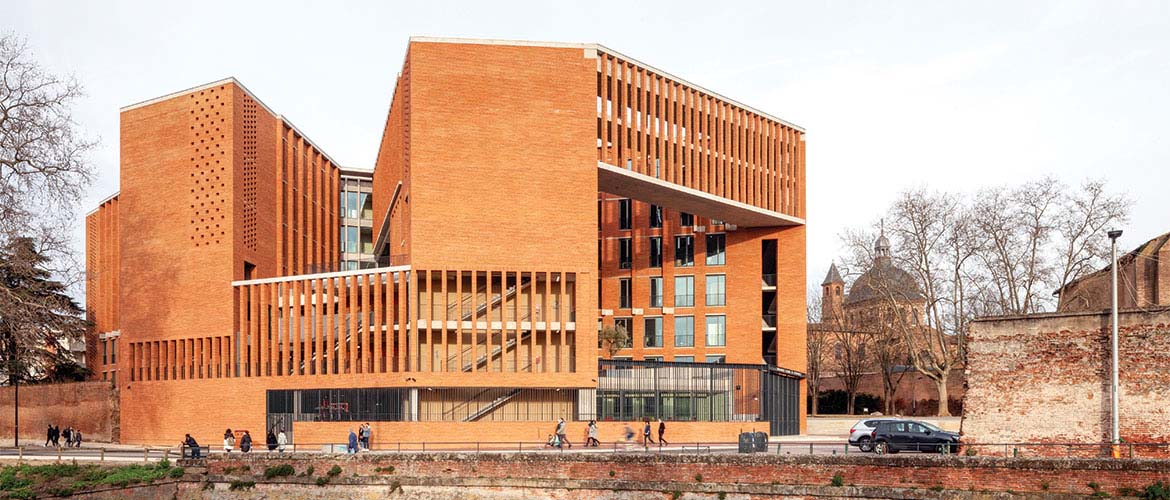
The imaginary is now real and the real is now the imaginary. i will have to retain the images of the best architecture that completed in 2020 in my mind: the Toulouse School of Economics by Grafton Architects being a great example. And instead live with the surrealism of lockdown. The lightbulb moment for Machine Book of Weird was reading Mark Fisher’s useful definition in his book The Weird and the Eerie. We subsequently found a series of texts that explore how our condition is now about the contact between incommensurable worlds. Our preoccupation for the foreseeable future is with interiors and the thresholds they present to other places, which for now, we must imagine.

 cosmopolitan scum
Thanks! And hope to catch up in real life in 2021. My Banham book is out in May and we must get you a copy. Hope all’s well with you and the family! Happy holidays etc – R
Sent from my iPhone