A Cathedral Dedicated to Excrement

As London’s sewer system accepts into its gaping maw a huge autumnal deluge, it is worth sparing a thought for those who created it. The Metropolitan Board of Works was created in 1855 to improve the cities infrastructure ‘under the earth and above the earth’. A contemporary view of the Board was as ‘appointed physician to the metropolitan organism… (with) the duty of restoring it to health and promoting its future growth, of giving strength to its muscular, and vitality to its arterial system, roundness to its limbs, and beauty to its face.’ A year later, Joseph Bazalgette was apppointed Chief Engineer to the body. In 1858 London experienced the Big Stink.

During 1858, the summer was unusually hot. The Thames and many of its urban tributaries were overflowing with sewage; the warm weather encouraged bacteria to thrive and the resulting smell was so overwhelming that it affected the work of the House of Commons. The curtains of the house were soaked in chloride of lime. Members considered relocating upstream to Hampton Court. Plans were made to evacuate to Oxford and St Albans. In typical London fashion, heavy rain finally ended the heat and humidity of summer. However, a House of Commons select committee was appointed to report on the Stink and recommend how to end the problem.

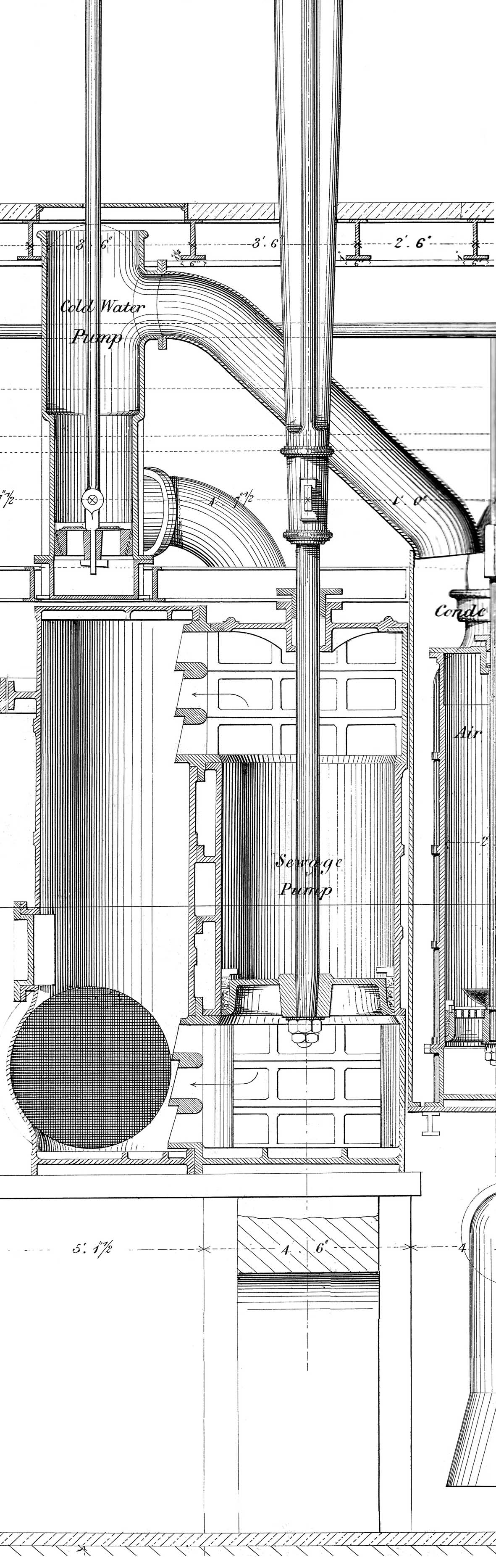
Bazalgette designed an extensive underground sewerage system that diverted waste to the Thames Estuary, downstream of the main centre of population. Six main interceptory sewers, totalling almost 100 miles (160 km) in length, were constructed, some incorporating stretches of London’s submerged rivers. Continue reading

Posted in 2012, Architecture, Engineering | Tagged , , , , , , , , | Leave a comment

Northern Seascapes

Not the V&A - a laboratory designed by Snøhetta for Marintek near Trondheim

Continue reading

Posted in Architecture, Engineering | Tagged , , , , | Leave a comment

Ruskin in Venice

The years that John Ruskin spent in Venice are no longer just an important biographical fact about an eminent art Victorian critic. They have become a narrative prism through which to assess architecture’s role in contemporary society. This month the British contribution to the Venice Architecture Biennale is effectively an architectural and artistic exploration of Ruskin’s writings.  At the most important exhibiton of architectural ideas in the world,  Britain’s contribution, housed in a small neoclassical pavilion in the Giardini in Venice, explores Ruskin’s relationship with Venice in a questioning way. The exhibition poses some important questions about Ruskin’s relationship with architecture’s role in contemporary society, specifically around the way it is made. Liza Fior, the artistic director of the pavilion would have us believe that Ruskin was a radical. Continue reading

Posted in Architecture, Old Things | Tagged , , , , , , , , , , | Leave a comment

Empire State of Mind

I re-read JG Ballard’s Empire of the Sun recently. This was at the same time that I was getting sent beautiful shots of pavilions from the Shanghai Expo, and then writing about it in some kind of historical context. At first the two Shanghai’s seemed so far apart. Today it is the site of architectural grandstanding and in Ballard’s description it was segregated by occupying powers. Today it is a port from whence China’s unprecedented industrial production is distributed to the world and in Ballard’s description it was an apparently arbitrary site for the battle between the British and Japanese empires. Continue reading

Posted in Architecture, Urbanism | Tagged , , , , , , | 1 Comment

Not Learning From Learning From Las Vegas

The exhibition What We Learned at Yale and the 3-day symposium Architecture After Las Vegas prompted a predictable degree of puffery from those media-friendly, Po-Mo apologists over at FAT.  Sean Griffiths review in Building Design was generally a list of names of the people who attended and a conclusion which appears to suggest that the text has finally won some sort of victory over Brutalism on its home turf. The piece by Charles Holland at least grasps the significance of the book as a hugely influential model for ordering and presenting architectural research. Both however failed to take a critical look at how the architect’s take their research and extrapolate an architectural style from it.

Continue reading

Posted in Architecture | Tagged , , , , , , | 2 Comments

A drop in the ocean

In July 2007, Hilary Clinton, then a candidate for US President proposed a no-flight zone over Darfur, to prevent the Sudanese government from bombing their own citizens. It was an attempt to call to a halt what has been described as the first genocide of the 21st Century. At the same time though, scientists from Boston University made an astonishing discovery beneath the ground of Darfur, which had from 2003 to 2007 been the site of 200,000 killings in a brutal civil war. Continue reading

Posted in Architecture, Engineering | Tagged , , , , , | Leave a comment

The Tallest Building In The World

This is the text of a phone interview with Bill Baker, structural engineer on the Burj Khalifa and partner of S.O.M, on the day after the Burj Khalifa was inaugurated.

What was the launch like?
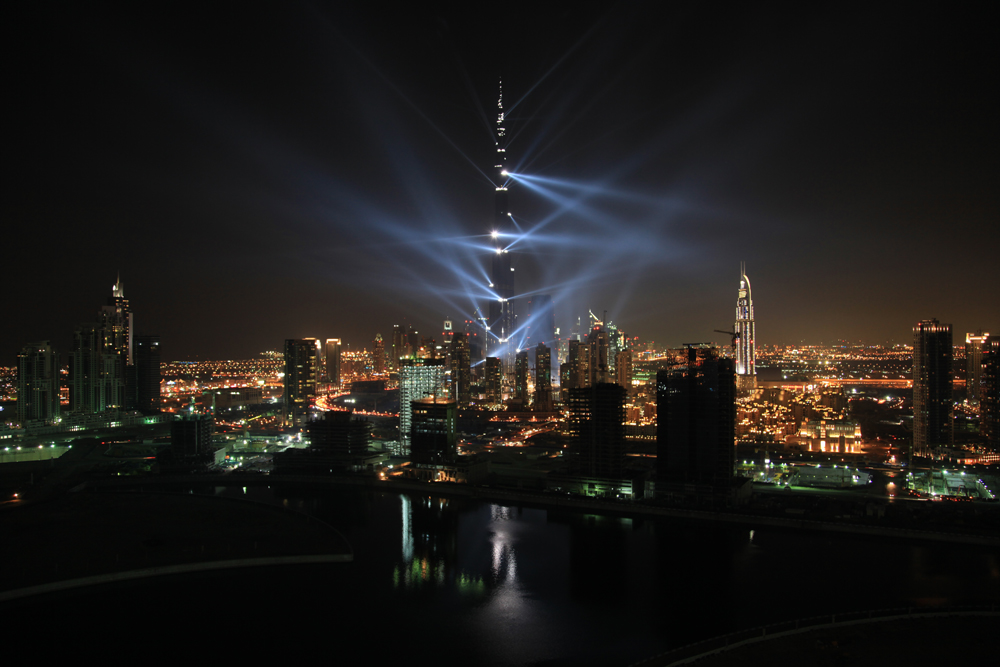
It was a pretty amazing launch. For structural engineers to see all this fire coming of your building is pretty shocking but it was an incredible event. There was this tremendous sight of sky-divers coming down. I couldn’t tell whether they were jumping off the building but I was told later they weren’t base-jumping. Then there was a light fountains. Then they had the lighting off, then spotlights. Then all the fireworks coming off the tower. It was incredible.

Continue reading

Posted in Architecture, Engineering | 2 Comments

Beijing Bye Bye

Building Number 10, Hu Jia Lou Public Housing Project West

Continue reading

Posted in Architecture, Photography, Urbanism | 1 Comment

Man and van der Laan.

The work of architect Dom Hans van der Laan (1904-1991) is more influential as a system than as a design. The Dutch Benedictine monk is acclaimed by those who embrace modernism as a style rather than as an outlook or philosophy. To the brick-ish modernists he is one of the truly original thinkers of 20th-century architecture. To those who believe in a democratic approach to architecture which embraces the technology of the day he is a throwback. Van der Laan sought a formal language for his architecture which could easily be compared to the catechism.

The Abbey at Vaals by Hans van der Hejden

Continue reading

Posted in Architecture | Leave a comment

“If you don’t eat yer meat, you can’t have any pudding.”

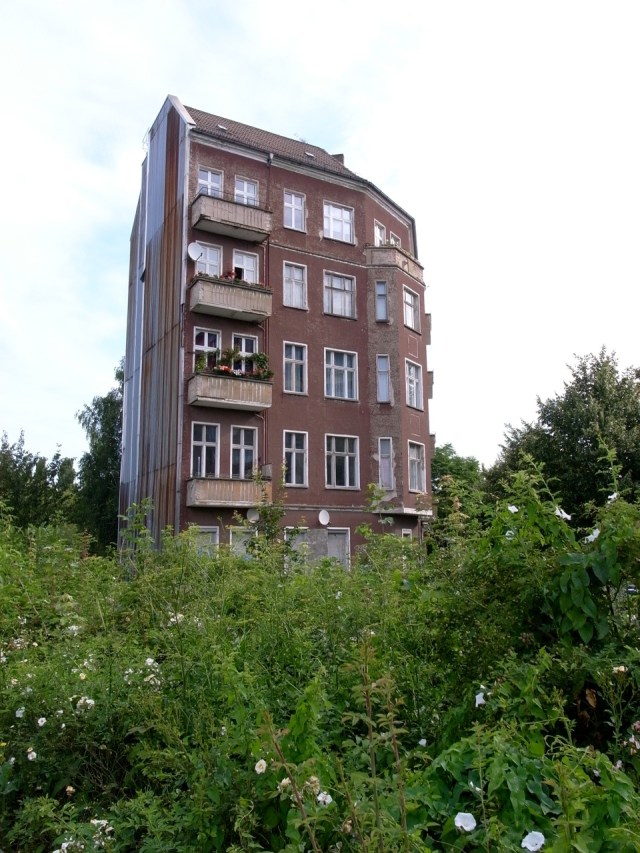
Jonathan Glancey repeated a few familiar myths about the Berlin Wall when he wrote about it recently. He wrote that  ‘what remains of it are a few graffiti-spattered stretches of concrete for tourists to snap one another by’. Certainly much of the actual Wall itself is gone. The East Side Gallery is indeed spattered with graffiti but then how better to treat the last long stretch of a structure designed to keep people apart? (There is surely a whole dissertation to be done about graffiti on the Wall and how it has influenced the art form across Europe.) I’m not trying to do Glancey down. His piece makes a wider point about walls in cities  but the fact is there is more to the Wall today than a ‘ few graffiti-spattered stretches of concrete’.

R0011521 Continue reading

Posted in Uncategorized | Leave a comment