
Twitter
Tweets by timabrahams-
-
Join 184 other subscribers
Previously
Categories
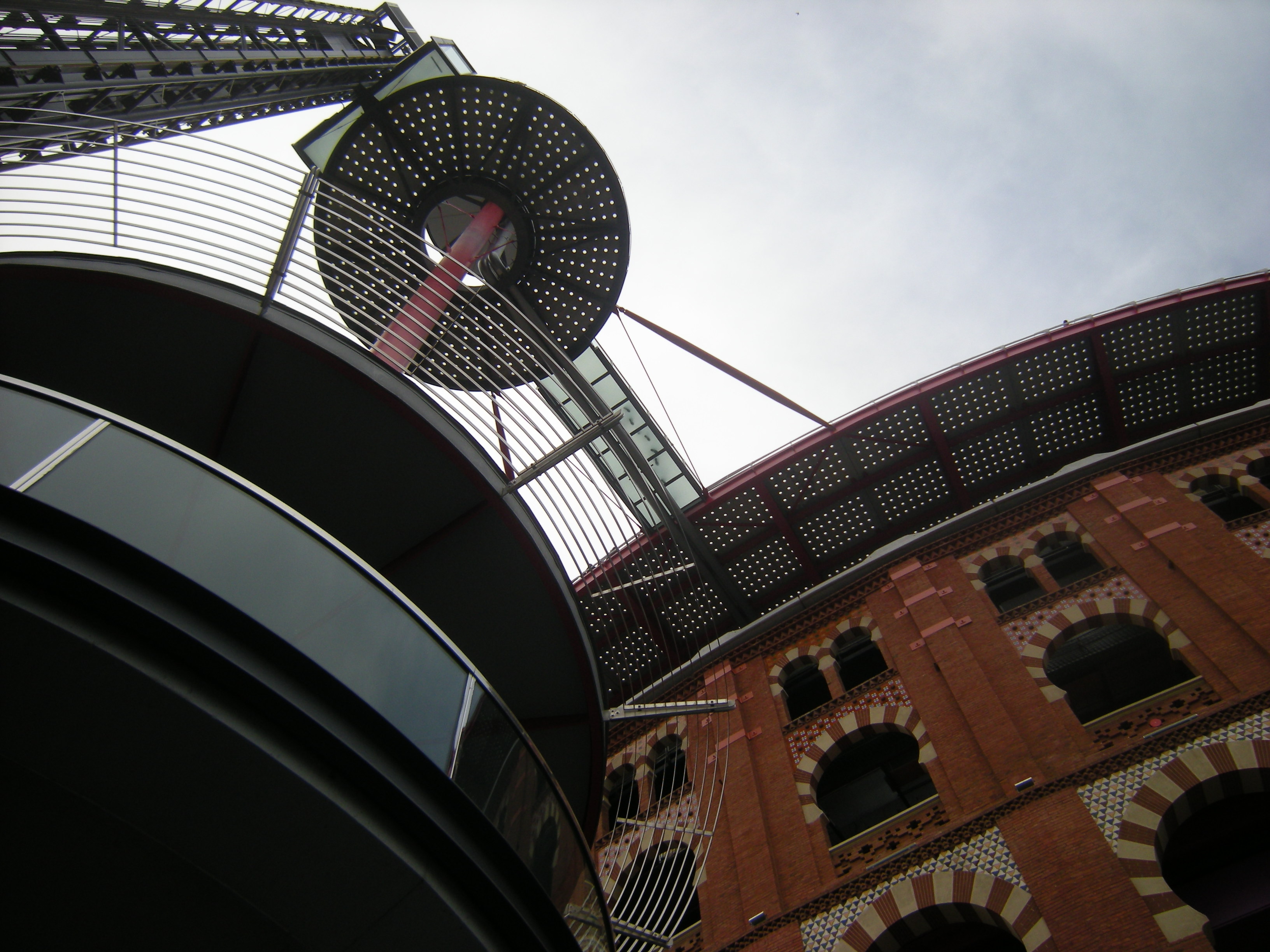
The Pompidou Centre Inside Battersea Power Station
Posted in Architecture, Engineering, Old Things, Urbanism
Tagged Architecture, barajas, barcelona, las arenas, mike davis, neo bankside, richard rogers, rshp
Leave a comment
Reaching for My Revolver
 Will Gompertz on the Today programme this morning said that the arts has “always been embedded in the idea of hosting the Olympics.’ As portions of the £80m Cultural Olympiad were officially announced – a group of artists to create posters, a weekend festival of classical music, loads of Shakespeare – Gompertz suggested that the arts have always been integral to the Olympics but that the Cultural Olympiad has had ‘minimum impact as a brand name.” What Gompertz didn’t really get though was that although their has been a relationship between arts and the Olympics it has always, always been unsatisfactory. Continue reading
Posted in 2012, Art, Urbanism
Tagged 1948, 1976, corridart, cultural olympiad, de coubertin, London, london 2012, montreal, nero, ode to sport, Olympics, tony hall
Leave a comment
All The People
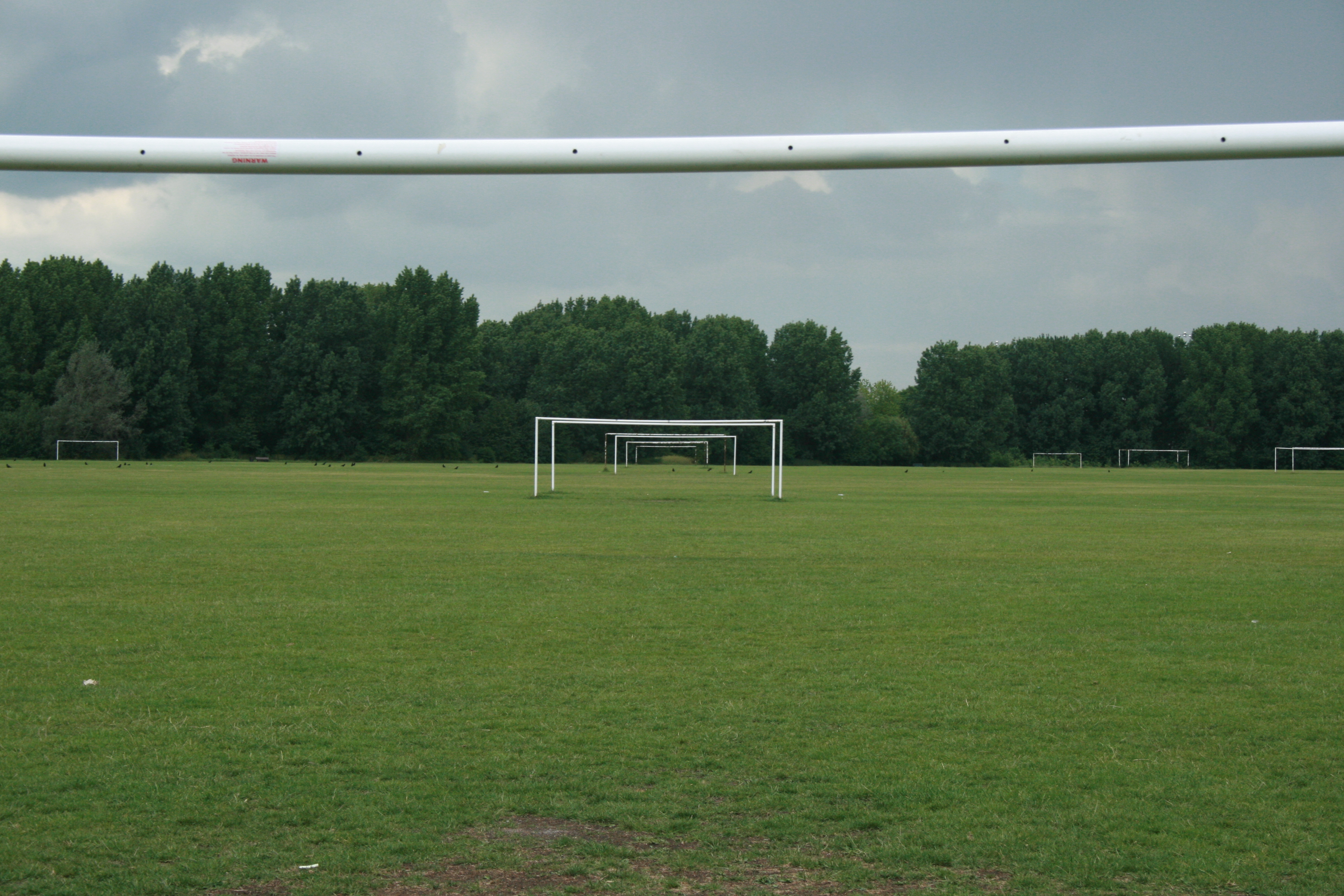 Just a short walk north from the Olympic stadium, up a canal dug in the 1770s, is the Hackney Marshes. Unprepossessing on a weekday with the wind whipping in from the west, this site has in a fact become defined by a clash between the international and local role of sport: in a very different way to the Olympics perhaps but making some interesting parallels.
Posted in Architecture, Old Things, Urbanism
Tagged bastard countryside, bucolic, david beckham, football, hackney marshes, industrial, landscape, rio ferdinand, stanton williams, terry venables
2 Comments
Tadao Ando and his Secretive Champion.

Japanese architect Tadao Ando’s second permanent project in the UK may not be much – a water feature in Mayfair – but it reveals his special relationship with a hitherto little known patron of the arts.
Posted in Architecture, Urbanism
Tagged chateau la coste, connaught, frank gehry, michael blair, paddy mckillen, serpentine pavilion, stephen sills, tadao ando, westminster
1 Comment
A Ballardian Shard?
This is a great documentary by the film-maker Simona Piantieri, which I contributed to. I think she gets a great range of voices who actually provide an insight into the building. I think I’ve modified my views on it as a consequence of watching. It helped me see beyond Renzo Piano’s spin to appreciate what a great building it might actually be.
Posted in Architecture, Engineering, Urbanism
1 Comment
Beyond Nations
 Designed by a British architect and built by a British construction company, The British Antarctic Survey’s new research base, known as Halley VI, on the Brunt Ice Shelf is on one level an expression of the best in contemporary design from the UK. Approximately 1.2 metres of snow accumulate each year on the Brunt Ice Shelf and buildings on the surface become covered and eventually crushed by snow, necessitating periodic rebuilding of the station. This part of the ice shelf is also moving westward by approx. 700m per year.
This harsh environment was described in the brief for an international competition which was won by Hugh Broughton Architects who created a modular system of monocoque units on hydraulic jacks that can survive the most perilous of conditions.It is a typically bold move by the British Antarctic Survey: a fascinating, dynamic institution who has cleverly used architecture and design to further its aim to explore and scientifically examine the most uninhabitable corner of the globe.
Halley VI also represents the union between two of the most well regarded facets of the United Kingdom’s industry: design and scientific research. The Halley Research base was made famous by the British scientists who whilst working here in the 1980s made one of the most significant scientific discoveries of the modern age – the discovery of the hole in the o-zone layer, which led directly to the banning of CFCs. Yet as the project manager for the complex construction of the base on a shifting ice flow told me: ‘the Antarctic is no place for jingoism.’
Posted in Uncategorized
Leave a comment
The Posh Loo Olympics

There is a peculiarly English quality to temporary seating. The Badminton Annual horse trials require around 14,000 tiered seats including half of which is covered. The Queen allows around 5,000 temporary seats on to her land for the Royal Windsor Horse show. Tennis tournaments at Queen’s and Wimbledon are augmented annually by temporary seating. Take any so called ‘elite sport’ i.e. one normally played by a very few rich people, which is granted a moment in the sun, such show-jumping, rowing, polo, and you will find a home for temporary seating: the more rarefied the guest, the more likely that their annual hurrah will be hosted on temporary seats.
Posted in Uncategorized
Leave a comment
When Doves Fry

A plan to ban fireworks from the Opening Ceremony of the games, prompted IOC President Jacques Rogge into prolonged reminiscence about a salutary tale from the annals of Olympic history. Rogge, one of the rare members of the IOC to think historically when faced with a new challenge, went back to the Opening Ceremony of the 1988 Seoul Games, when the Olympic Cauldron was lit at the beginning of the Games by three athletes who rose on a hydraulic platform to an elevated cauldron sitting high above the stadium in Seoul. Doves which had just been released were still wheeling in the stadium. Some had come to settle on the cauldron towards which the athletes were rising with torches held aloft.
Posted in 2012, Media, Pageantry
Tagged antwerp, Architecture, ceremony, danny boyle, design, doves, ioc, jacques rogge, Olympics, Tlatelolco
Leave a comment
Portal placements
As the Be Open Sound Portal passes into the hands of two of London’s most dynamic creative schools, the very limitations of the experience it offers – an unparalleled, immersive sound experience normally only experienced by a privileged few for highly specific technical reasons – will be tested to the full. Looking at the work of some of the individuals who will guide students through this experimental process may give us an idea which direction the exploration may take.
In the summer of 2011, Colin Priest created a sound and action installation comprising 100 bicycle bells which were situated at critical experiential points along the Greenway, Capital Ring towpath and Stratford High St. The aim, said Colin, was to “wake up an area of the East End that maybe people were unaware of.” Priest is an inspirational figure capable of combining educational and artistic activity to aid and complement the development of new areas in London, particularly the area around the Olympic Park near where he lives. What is also interesting is the way he uses sound to highlight activity. Sound is not the goal in itself but a measure.
He is part of a team that will use the Be Open Sound Portal for a series of investigations into sound as metre for how space is experienced. The team is led by Dr. Kenneth Wilder, who is course director of the MA Interior and Spatial Design Course Director at Chelsea College of Art and Design. Speaking about the MA course, he says: “We have a very broad range of what we consider interior design practice,” he says. “But we have a very real concern with how people inhabit space.” The academic team at Chelsea College of arts and design will use the Sound Portal to further this investigation.
Having practiced and taught interior design and architecture, Wilder’s own art practice combines video with sculptural object. Wilder who studied at the Royal College of Art, and did his doctorate at Chelsea, has exhibited in both the UK and Germany. His work focuses on the philosophical aspects of the spectatorship of video and painting, and its relationship to architectural space. As a result the Working with Interior Spatial Design students from all levels, Priest and colleague Dan Scott will support the creation of an experimental light and sound-scape for installation in the Rootstein Hopkins Parade Ground, the large square at the heart of Chelsea College of Art and Design
Conversely the team at Central St. Martins, will use the Be Open Sound Portal as an incubator or catalyst for multi-disciplinary working. Each of their sessions is intended to test out the promise of the knowledge gained from the notion of crossing borders between disciplines by asking the question ‘What knowledge is produced by ‘contamination’ in the creation of sound art?’ This team which will examine the distinctions in the teaching of art and attempt to blur them is led by Christabel Harley who has taught Critical Studies on the Fine Art BA Degree at Central St Martins for 12 years and frequently examine the way in which art is taught.
She is joined by Matt Lewis a sound artist who has continually sought to extend the possibilities of sound as an art form, often stepping into worlds which would have been previously the realm of the journalist or creative writer. The description of a recent work, called Tumble will have to suffice. During September and October 2011 racing pigeons were resident on the roof of a gallery in South London. During the two weeks that the installation ran, the pigeons were fitted with GPS tracking devices and released from various locations around city. The pigeons then flew back to their loft above the gallery space. The flight routes tracked by GPS formed the musical structure of a piece with the coordinates of their flight defining which audio material was triggered.
The Sound Portal was originally based on a highly specialized tool for acoustic technicians and architects to assess the performance of future buildings and then became an experimental performance space. Its potentials will be explored when it is introduced to a whole range of creative activity and tested – if not in a mechanical sense then in a conceptual sense – to its very limit.
Posted in Architecture, Design, Engineering, Technology
Leave a comment
Gratuitous Beauty Pageant Post

Giovanna Mazotti was voted Miss Italy in 1952 winning the right to represent her country at that year’s Miss Universe competition, which was eventually won by Miss Finland. Upon returning home, Miss Italy told a Rome newspaper that the Miss Universe contest was rigged in favor of Finland as a publicity stunt for the Summer Olympics. “Why not call her ‘Miss Olympic’ if publicity for the Olympic games is the object?” Continue reading
Posted in 2012, Art
Tagged 2012, baron de coubertin, cultural olympiad, London, Olympics, ruth mckenzie
Leave a comment
 cosmopolitan scum