Las Vegas: Where Architecture Goes to Die.


The history of Las Vegas is in its signs. The famous sign for the Stardust casino is in fact a celebration of the nuclear tests that took place in Nye County about 100km away from Vegas during the 1950s.  It is said that Howard Hughes, having turned the ninth floor of the Desert Inn into his own asylum, bought the Silver Slipper casino so he could reposition its famous neon sign and thereby stop it from keeping him awake at night. Although the casinos are demolished after 20, 30 years, the stories pile up like sediment: the latest venture is always a means of viewing the ever growing history of Las Vegas. The strip may stay forever young, but the signs and the pile of stories grows higher.

Continue reading

Posted in Architecture | Leave a comment

Taste And The Tower

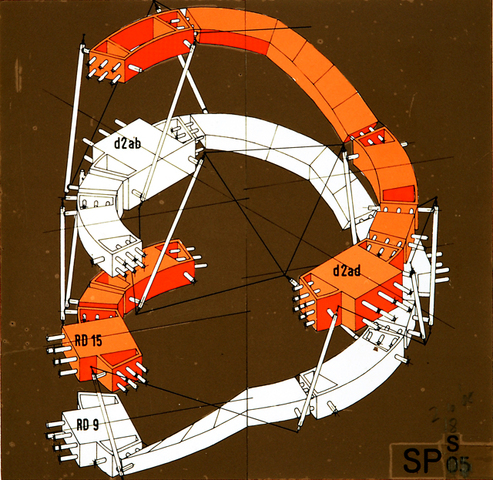
The last section of the ArcelorMittal Orbit is put in place

I want to say something about the history of the relationship between towers and the Olympic Games, leading to a few comments on the outpourings of disgust around the ArcelorMittal Orbit. It is often forgotten that this began with the Eiffel Tower.

Continue reading

Posted in Architecture, Art, Engineering, Interview | Tagged , , , , , , , | Leave a comment

Interview: Michael Webb

Axonometric of Helical Stairway part of the‘Entertainments Palace’ on the site of the Empire Theatre, Leicester Square, London. Originally ‘failed’ as student final thesis project at the Regent Street Polytechnic.

Michael Webb was born in Henley-on-Thames in England. Along with his fellow members of the Archigram Group, Webb has contributed more than any other British architect to the wholesale revolution in architectural drawing that took place in the 1960s. Co-opting techniques and approaches from advertising, graphic design or pop-art, Webb together with his fellow Archigramers Warren Chalk, Ron Herron, Dennis Compton, Michael Webb, David Greene and the other one rethought the role of architecture, as a facilitator of modern life rather than a picturesque backdrop. He has gone on to consistently push and reconsider the manner in which architecture is presented at drawing stage. I spoke to him at the CCA where he was working on his current project. 

Continue reading

Posted in Architecture, Design, Interview | Tagged , , , , , , , | 2 Comments

Occupation should be a right rather than a form of protest.

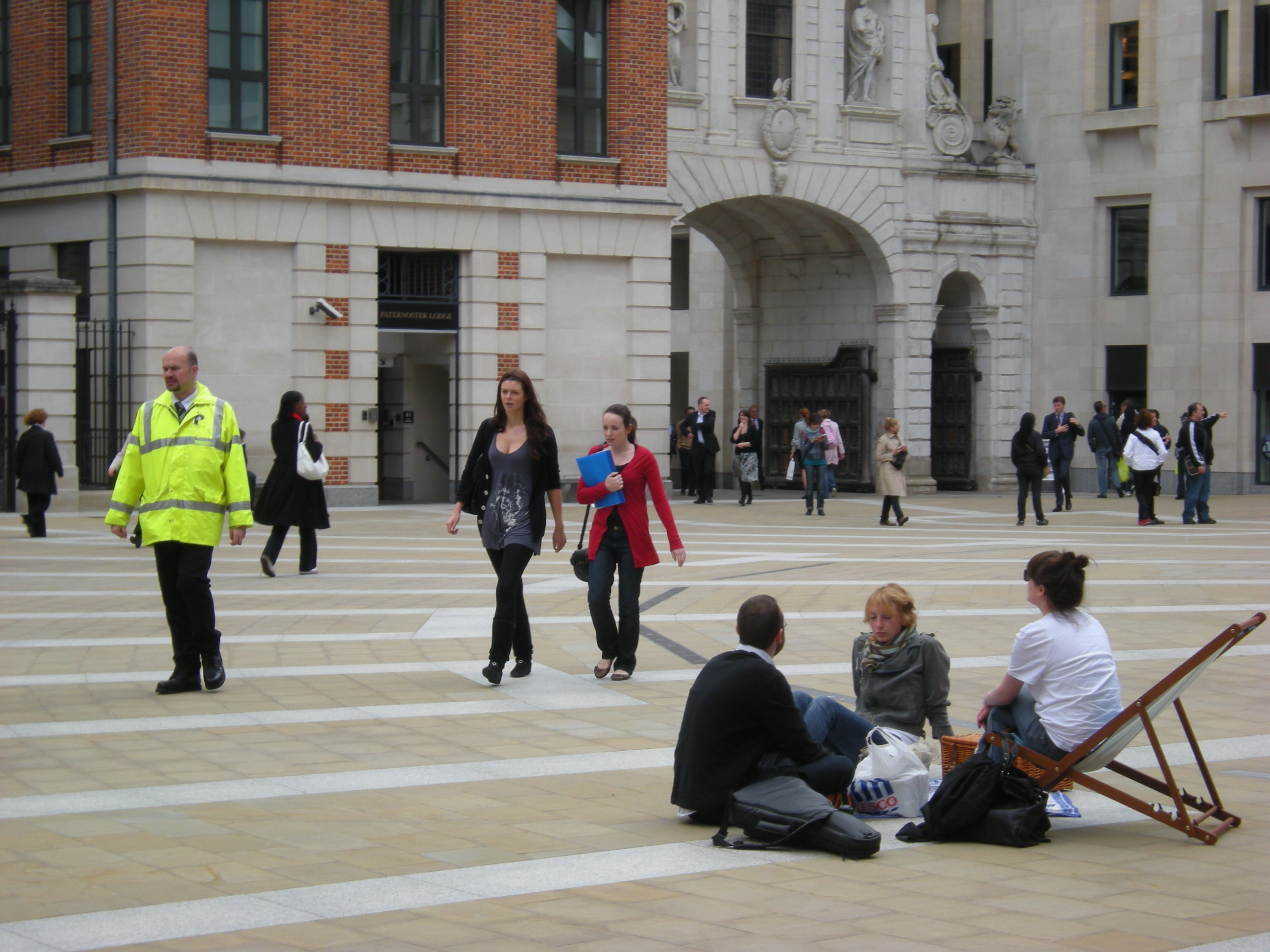
A photograph of Paternoster Square from a project I organised exploring the regulation of public space in May 2009. This was undertaken with the support and guidance of the Manifesto Club

During the recent protests in Greece there was a moment in which the struggle against impending privatisation became concrete. In Thessaloniki, protesters hung a large banner from the city’s main landmark, the White Tower, which said “for sale” as a protest against the government’s massive denationalization schedule, which they perceived as selling away the country’s assets. Even if this goes ahead, it is predicted that for the next 10 years Greece will go through heavy recession followed by a very slow recovery.  Continue reading

Posted in Uncategorized | Leave a comment

Interview: Cecil Balmond

Cecil Balmond is a Sri Lankan born, British designer, engineer, artist, architect, and writer. Known for his close collaborations with architects, such as Toyo Ito on the Serpentine Pavilion and Rem Koolhaas on the Casa da Musica in Porto and the CCTV in Beijing, he also works closely with artists, particularly Annish Kapoor. Indeed their major project the ArcelorMittal Orbit is nearing completion on the main site for the 2012 Olympic Games in London. 

Continue reading

Posted in 2012, Design, Engineering, Interview | Tagged , , , , , , , , | Leave a comment

Interview: Jaime Lerner

Jaime Lerner is the celebrated thrice Mayor of the Brazilian city of Curitiba and twice governor of the state of Parana. Trained as an architect and then planner, he is famous for his acts of urban acupuncture, swift, decisive moves to fundamentally address transport, housing and planning issues. Now feted the world over for the success of his projects, I spoke to him about the origins of his ideas. 

Continue reading

Posted in Interview, Urbanism | Tagged , , , , , , , , | 1 Comment

The Limits of Europe: Nuclear City

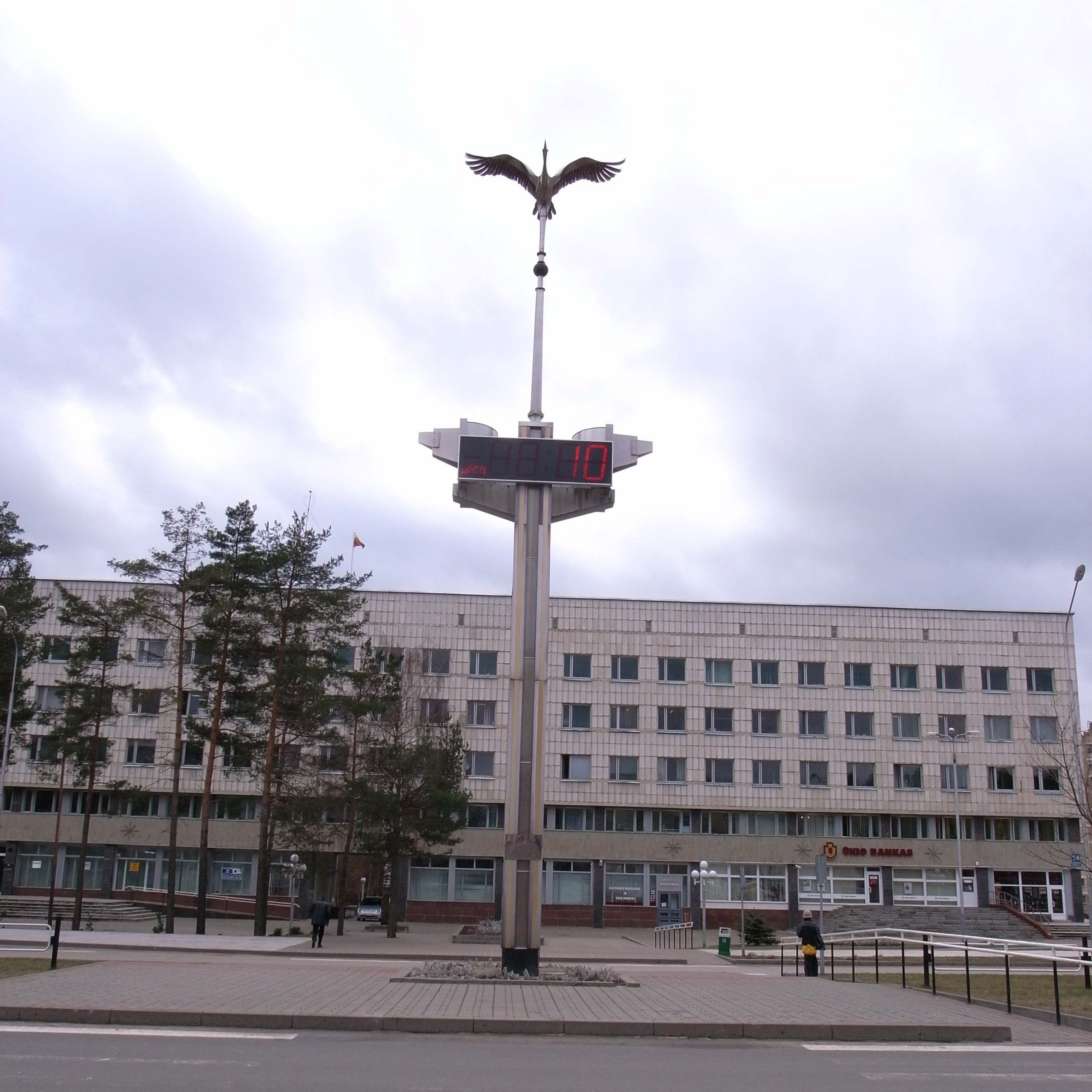
The Limits of Europe is a new series of special reports from the outer reaches of Europe. In these wastelands and the structures they contain: from space stations in the Arctic regions to modern ruins on the Mediterranean rim, we can see the ideological conflicts that will determine Europe’s future being fought out. First we look at a town on Lithuania’s border with Belarus built to service Chernobyl’s twin, a nuclear power station that was once the largest in the world. As one might expect for a new town, the town clock in Visiginas is digital. This highly informative clock gives the citizens of this small town in eastern Lithuania,  25 seconds of time, 25 seconds of date and then it also tells you how much radiation there is in the atmosphere.  At the civic heart of this Soviet built new town at the very edge of the European Union, close to the border with Belorus, is a geiger counter. Between the town administration block and the shopping centre a digital display announces how many microRoentgen per hour there are in the atmosphere. One minute it is 8, the next it is 11. Very safe.

Continue reading

Posted in Architecture, Limits of Europe, Urbanism | Tagged , , , , , , , , , | 1 Comment

Postmodernism: It’s History


It is entirely possible to love the current exhibition Postmodernism: Style and Subversion at the V&A and find in it a sign of why Post-Modernism is at a dead end. Continue reading

Posted in Architecture, Art, Design | Tagged , , , , , , , , , , , , , , , | Leave a comment

Interview: Yona Friedman

dvintiner_mg_03922

What are your views on planning?
I am very much against planning. We are now in a worldwide crisis due to overplanning. I am against overplanning. Planning means that you consider every event possible. Except an event which is unexpected and sometimes the unexpected arrives. It’s a little thing and then it grows. Its an avalanche by snowball. Nobody made a planning error. The error was that they tried to plan something which is not plannable. This is the error. Continue reading

Posted in Engineering, Interview, Urbanism | Tagged , , , , , , , , | 4 Comments

Why Park Hill Should Live

Reyner Banham liked Park Hill. To the greatest critical champion of New Brutalism, it was ‘the biggest brutalist building ever completed’ an example of all that he had, once at least, held dear. In his book The New Brutalism, written in 1966, five years after the completion of Park Hill, he identified in the various buildings he had collected together, ‘a preoccupation with habitat, the total built envrionment that shelters man and directs his movements’. For him Park Hill was the realization of an ideal, with its ‘four 12-foot wide pedestrian promenades’ that ‘thred through the whole complex’. Continue reading

Posted in Architecture, Old Things, Urbanism | Tagged , , , , , , , , , , , , , , , , | 3 Comments