
it’s hour come round at last, slouches towards Stratford to be born?

it’s hour come round at last, slouches towards Stratford to be born?
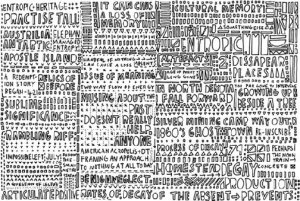
As its name suggests, the Ordnance Survey grew out of a military operation: specifically the attempt to control the Highlands of Scotland in the wake of the Jacobite rebellion of 1746. A military engineer called Lieutenant Colonel David Watson was charged with conducting the survey under the command of the Duke of Cumberland. The map, which also features a standardisation of spelling and naming, hangs today in the British Museum in London – a picture of how a subjugating force learns about the terrain it must occupy and then conveys that information.
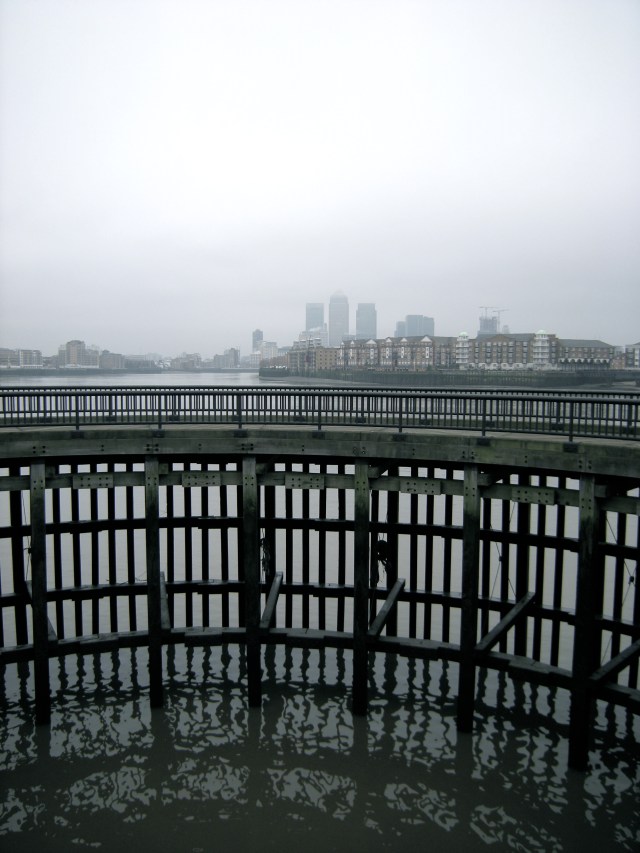
A really nice bit of flaneury at Homo Ludens, which identifies exactly what makes the former docks at Wapping in London such a profoundly dispiriting, disorientating experience. Continue reading
Transcription of an interview with Ai Wei Wei. He’s doing the answers. Pictures are by me.
What is the method of construction of your latest exhibition?
This is Chinese household furniture that folks have been using for thousands of years. They are the most ordinary objects in southern China. The material is bamboo. If you look closely, the poles and the chairs are one thing.
How does the piece reflect your relationship with Herzog and de Meuron?
We have been doing several projects together and we have a mutual understanding about art and architecture. We often share concepts and ideas. The relationship is part of architecture but its also more important than architecture.
More images from Born to Work by Nick Hedges. What is so astonishing about these pictures is the way they are so vivid even if the world they inhabit is gone for ever. Nick manages to simultaneously capture the human dignity even as they work amidst a dehumanising process. There is sympathy, but no moralising.
I’ve picked out some of the images from the book which feature women. The images together with Huw Beynon’s text highlights a few things that we tend to forget. Women were not greatly served by heavy industry. Beynon points that in 1911 24 per cent of employed women worked in skilled jobs but by 1982 that had halved. In 1911, a higher proportion of women could be found in management than in 1982. Beynon says that the expansion of opportunity for women in the 1970s was highly selective. In a report from 1978, the Equal Opportunities Commission concluded that little progress would be made in sex equality. More information about Nick’s work can be found at Working Life.
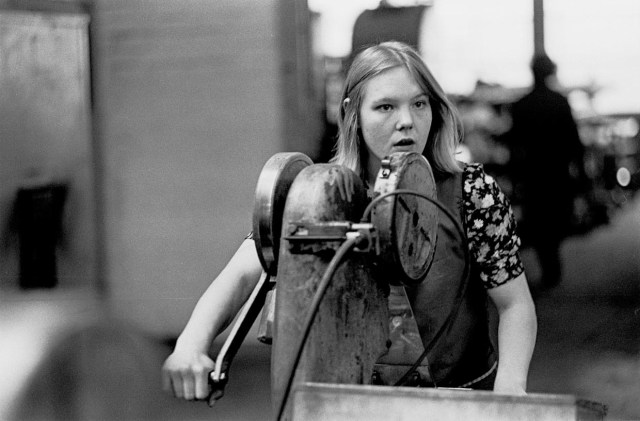
16 year old trainee, Lockworks,Willenhall 1976
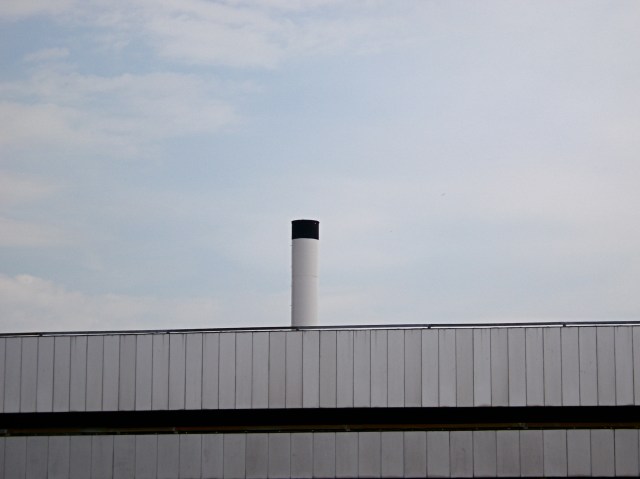 Jordan Baseman’s excellent art piece which was displayed at the Collective Gallery in Edinburgh earlier this year tiptoes cleverly around some of the aesthetic and political issues that surround Britain’s civic modernist heritage.
Continue reading
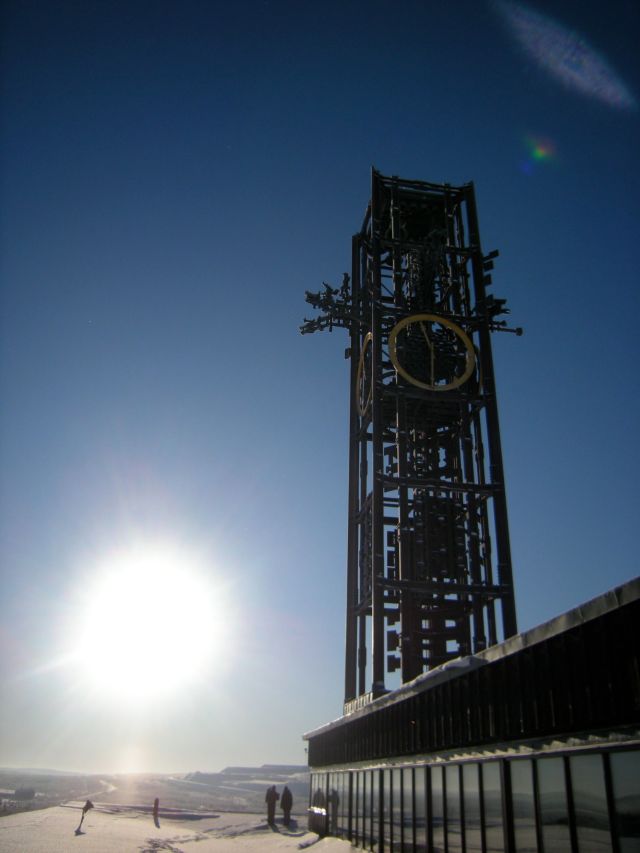
The mining town of Kiruna is not a normal place. For a start its 145km north of the Arctic Circle in Sweden and for another the mine that it was built to serve is thriving. It costs about four times more to mine iron ore beneath the Arctic Circle in Sweden that it would in an opencast mine in India or Brazil. However LKAB the mining company have been able to stay ahead of the game by treating the iron ore on site and mixing it with special compounds. The mine benefits from the expertise of the top mining engineers in the world who have been attracted to this town of 18,000. There is a very Swedish logic to the simple beautify of the place. As this article on Strange Harvest makes clear the mine and the town are also close in more negative, potentially destructive ways. Yet what the post doesn’t say is that one of the reasons for keeping Kiruna alive is because it is beautifully planned and constructed.
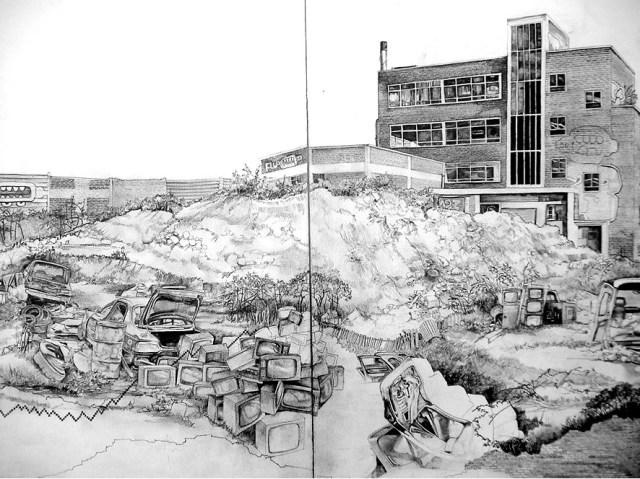
This is the transcript of a discussion with Laura Oldfield Ford, artist, publisher of Savage Messiah and citizen of Dalston, London. It took place during an 11 mile walk around the Olympics Site undertaken in early 2009, around the time of her rapturously received exhibition at the Hales Gallery which brought together in stark, visual form, the concerns a whole generation of ne’er-do-wells have been expressing about their beloved London.

Yet another horrendous piece of graphic design plops through the mat of the poor benighted inhabitants of London’s Olympics boroughs and yet again they as one recoil at the hideosness of the logo. (A hideousness which I want to explain but not reproduce, largely because it makes any page or any screen that it sits on look skewed or cranked.) At the time it was launched, the consensus of course was that the logo was bad because it tried to be youthful, as the comments to this Guardian story at the time make clear. This is certainly the case. The colour palette is bright and vibrant, the pink and yellow is particularly redolent of eighties children’s TV graphics. To continue in a more generous vein, the shadow effect is pure 80s retro which recalls some of the work in Dazed from around the beginning of the decade.
Continue reading

You are watching a screen. Sean Connery, I mean, James Bond has his linen jacket hooked over his shoulder on his finger. He walks towards us through a sunken courtyard beneath a strange concrete superstructure and then through a set of glass doors. It’s ruddy Diamonds are Forever and he’s about to have a tustle with the female assassin/acrobat team Bambi and Thumper.
Except he’s not. The subtitle Elrod House, Palm Springs, California appears on the screen and we realise that we aren’t about to get on with some James Bond. Instead we are watching a documentary about the building he is in. Just at the moment when Sean Connery is about to get into a scrap with two semi-clad would-be assassins we cut to Connery as he is today; balder, still a star. He’s holding the remote control which, we suppose has just curtailed our enjoyment of the fight. This is a documentary about architecture but Hollywood is in contol.
 cosmopolitan scum